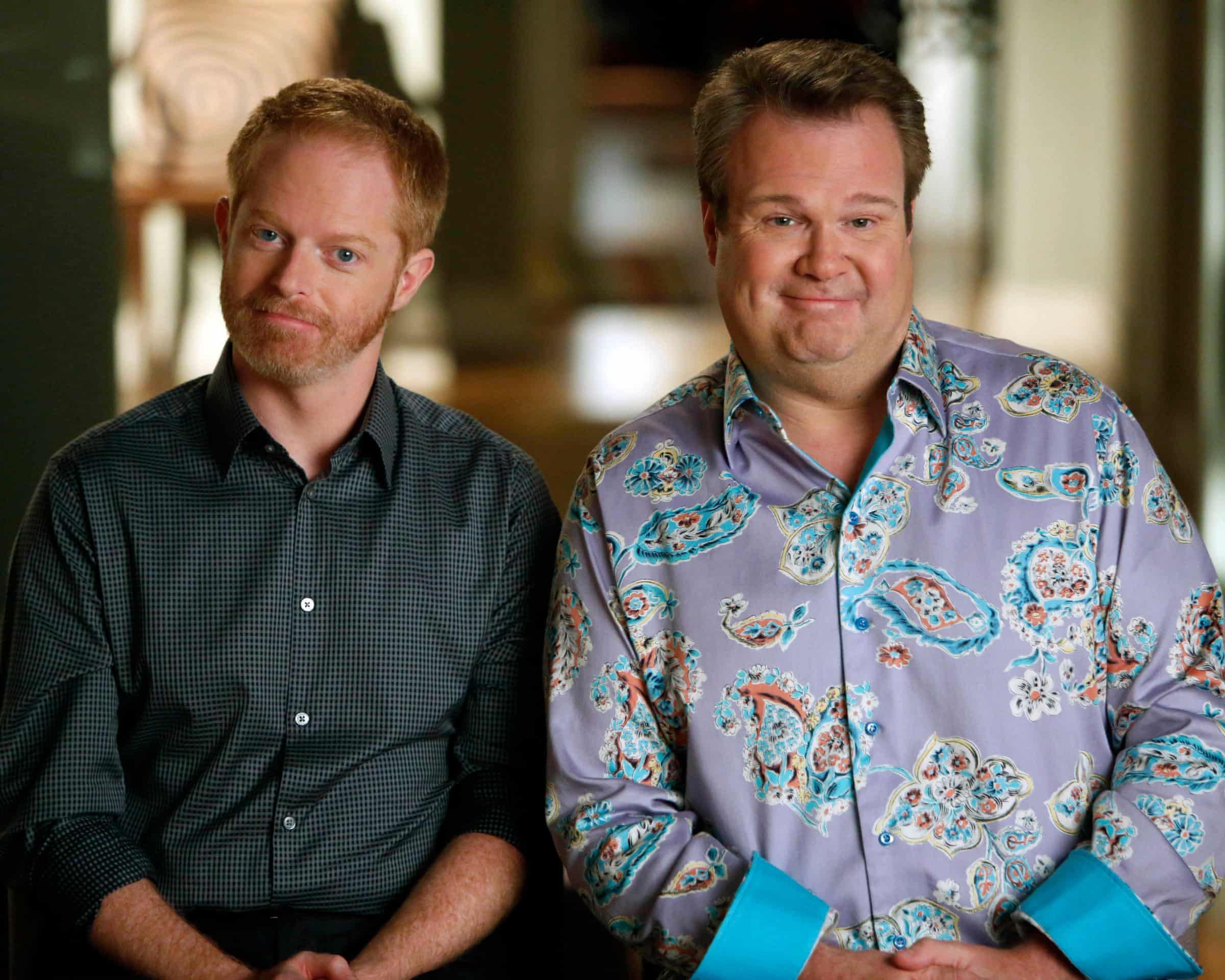
For many viewers, television once offered little evidence that gay men could marry and raise children.
Modern Family placed Mitchell and Cameron inside a mainstream family comedy for 11 years. Their relationship attracted unusual scrutiny: critics counted affection, arguments and stereotypes more closely because so few comparable couples were visible.
The show’s response was persistence rather than perfection. Mitch and Cam married, adopted Lily and Rexford, disagreed, reconciled and planned a future. The writers even turned criticism about public affection into an episode about inherited discomfort and tenderness.
That ordinariness became the intervention. Young fans tell Jesse Tyler Ferguson and Eric Stonestreet that the characters showed them marriage and parenthood were possible. Humour let unfamiliar households become familiar without reducing their lives to a lesson.
One affluent sitcom couple cannot represent every queer family, and some jokes have aged unevenly. Representation also needs writers and decision-makers behind the camera. The achievement is a durable example, not a finished measure of equality on screen.